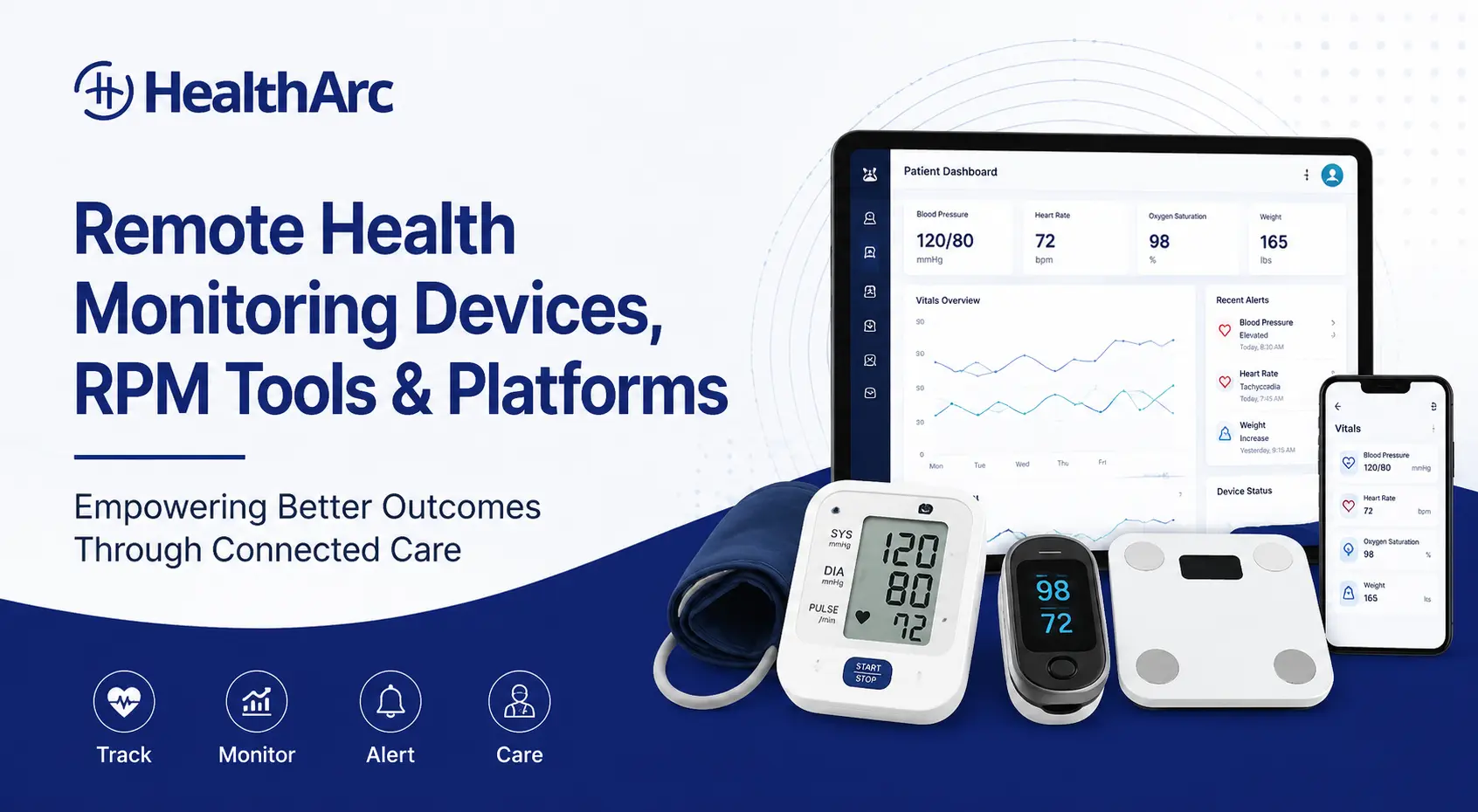
Remote patient monitoring (RPM) is a reimbursable healthcare delivery model in which a provider collects, transmits, and reviews physiologic data from a patient outside of a clinical setting — typically at home — using FDA-cleared connected devices. Data collected may include blood pressure, blood glucose, weight, oxygen saturation, heart rate, respiratory flow, or temperature. The provider or their designated clinical staff reviews this data, acts on alerts, and bills under CMS RPM CPT codes.
RPM is distinct from telehealth. It runs continuously between visits and generates billable time based on device data transmission and clinical staff time spent reviewing readings and communicating with patients. Under CMS rules, RPM applies to patients with one or more acute or chronic conditions and can be billed alongside CCM, PCM, and other care management programs. RPM does require an established patient-provider relationship. For existing patients, monitoring can begin without a new E&M visit. For new patients, the provider must first conduct an initiating E&M visit to establish that relationship before RPM services can be furnished and billed.
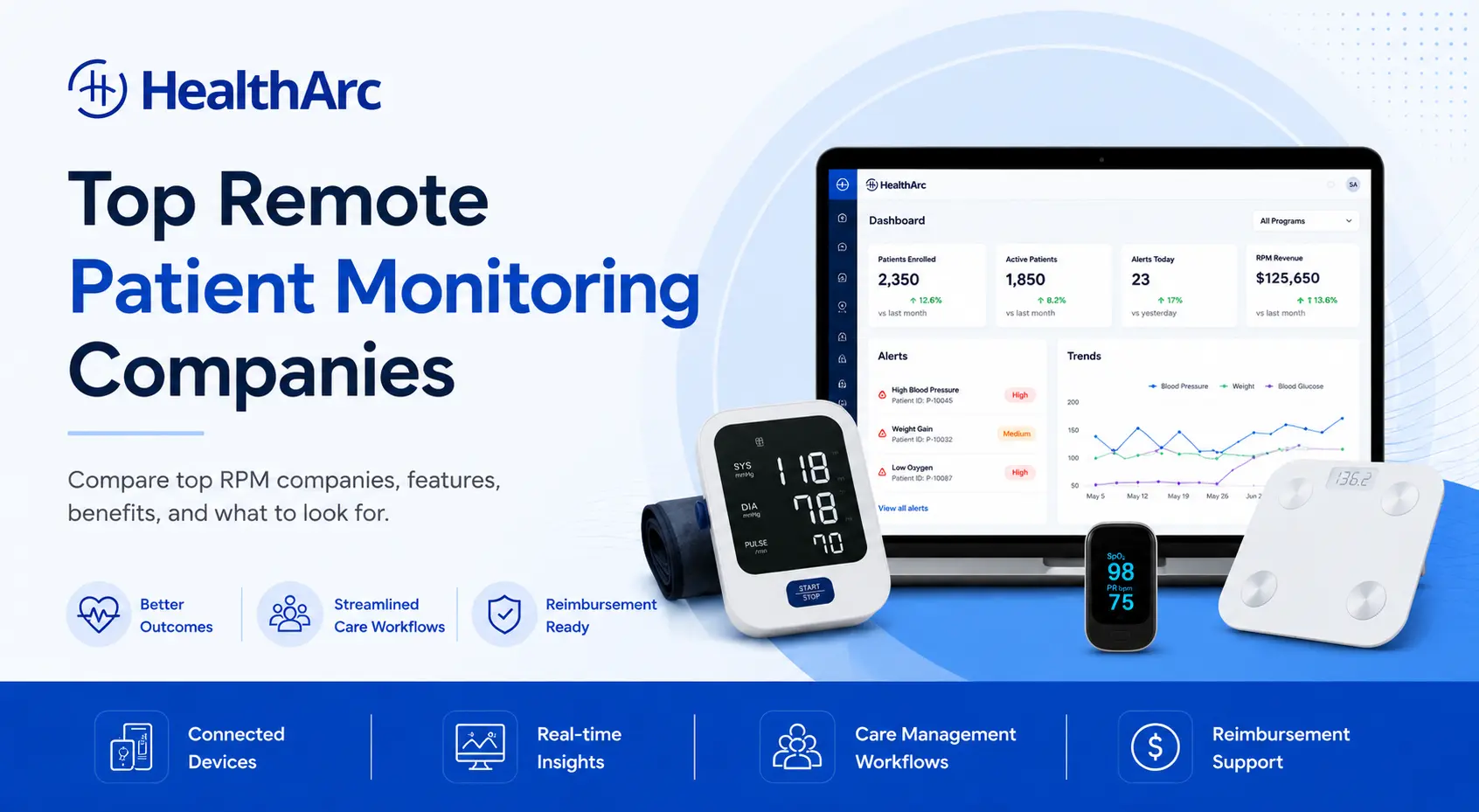
HealthArc’s RPM program combines a cloud-based monitoring platform, pre-configured cellular devices shipped directly to patients, and optional clinical staffing support — so practices can launch a fully operational RPM program without building infrastructure from scratch.